Cherokee Federal & the Tribal 8(a) Business Development Program

Serving the Nation.
Building a Nation.

Strengthening Federal Missions Through Sovereign Partnership

The Tribal 8(a) Program is a Congressionally authorized procurement tool designed to strengthen federal missions while advancing Tribal economic self-determination.

The program operates under a statutory framework reflecting the United States’ unique government-to-government relationship with Tribal Nations.

Federal agencies rely on Tribal 8(a) enterprises for speed, capability, and disciplined execution, reinforcing national security, expanding the domestic industrial base, and supporting American jobs.

The Current Landscape

What is Happening

The Tribal 8(a) Business Development Program is facing heightened scrutiny following public claims of widespread fraud and abuse. In response, approximately 1,000 firms have reportedly been terminated and billions of dollars in contracts placed under review.

The U.S. Small Business Administration has now proposed a rule (RIN 3245-AI66) that could materially restructure Tribal participation in the 8(a) Program.

If implemented broadly, the impact would not be technical. It would be structural. Changes to eligibility, entity structure, or participation rules would affect compliant Tribal enterprises that have spent decades building capacity to support federal missions.

The consequences would extend beyond any single Tribe. Federal customers, cleared employees, rural communities, and state economies — including Oklahoma — could experience disruption.

For Cherokee Nation alone, the 8(a) Program has generated $364 million over the past decade, reinvested directly into healthcare, housing, education, public safety, and other essential governmental services for its more than 470,000 citizens.

Policy reforms must distinguish between enforcement of wrongdoing and structural changes that undermine compliant enterprises and the federal missions they support.
Principal Chief Chuck Hoskin Jr.

The 8(a) Business Development Program has been a vital tool in addressing longstanding gaps through performance, accountability, and merit. Our eligibility is not a loophole or a workaround. It is a modern extension of a sovereign-to-sovereign relationship grounded in the U.S. Constitution and Federal statute.

Chuck Hoskin Jr.Principal Chief, Cherokee Nation — Senate Committee on Indian Affairs, February 2026


Background & Legal Foundation

The Tribal 8(a) Program: What it is & Why it Matters

The U.S. Small Business Administration's 8(a) Business Development Program was established by Congress in 1978 to help eligible small businesses compete in the federal marketplace. Recognizing that traditional small business frameworks did not adequately account for tribal economic structures, Congress specifically expanded the program in 1988 for tribal enterprises, grounding participation in the government-to-government trust relationship between the United States and sovereign Tribal Nations and acknowledging that Native 8(a) businesses must generate benefits for entire communities, not just individual owners.

Tribal participation in 8(a) is not a diversity initiative or a racial preference. It is a political and legal classification — repeatedly affirmed by the Supreme Court and rooted in federal statute, including the landmark ruling in Morton v. Mancari. The structural differences in how tribal enterprises participate in the program exist precisely because tribes are accountable to hundreds of thousands of citizens, not a single owner.

The United States has a unique, constitutionally grounded trust responsibility to federally recognized tribes. The 8(a) Program, as it applies to tribal enterprises, is a modern expression of that sovereign-to-sovereign relationship and a vehicle for self-determination.

1978
Program Established

Congress creates the 8(a) Business Development Program to help disadvantaged small businesses access federal contracting opportunities.

1988
Tribal Inclusion

Congress explicitly includes Alaska Native Corporations, Indian Tribes, and Native Hawaiian Organizations, grounding participation in federal trust responsibility.

1989
Cherokee Nation Establishes Its First Business

Cherokee Nation Businesses launches with a mission to build a sustainable economic engine that reduces long-term reliance on federal appropriations.

Today
A Proven Record

Cherokee Nation's federal contracting businesses have a proven record of delivering for the United States. Every contract won builds a brighter future for Cherokee citizens.

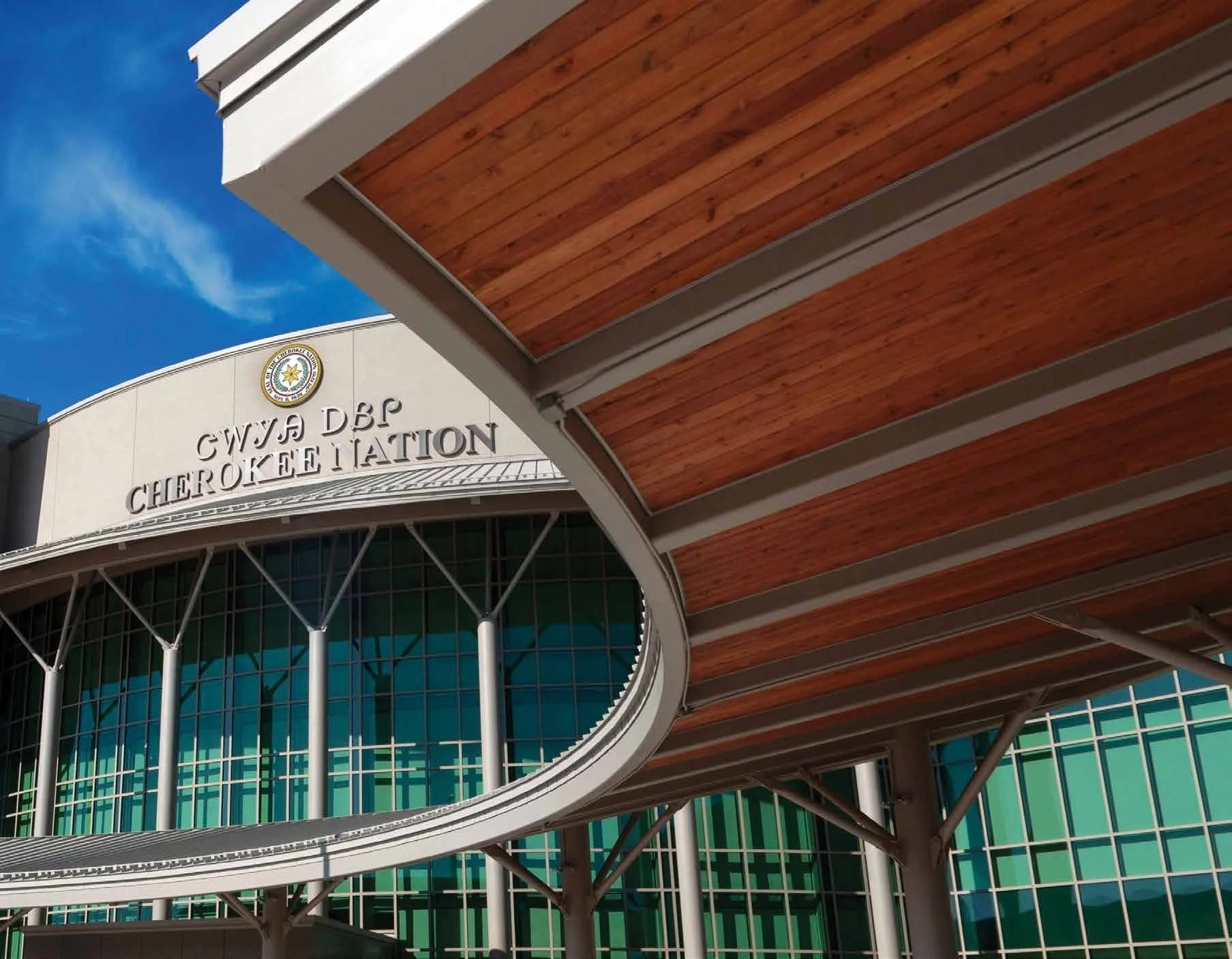
Cherokee Nation headquarters

What Policymakers Should Consider

Protecting Federal Procurement

Durable reform requires precision. Broad structural changes risk weakening federal procurement capacity and undermining Congressional intent. Policymakers must distinguish between correcting misconduct and constraining a statutory framework that has strengthened federal missions for decades. The path forward should reinforce accountability while preserving mission continuity and the federal trust responsibility.

01

Enforcement and structure are not the same.

Credible allegations of fraud should be investigated and addressed through enforcement of existing law. Structural changes to Tribal participation, however, affect compliant enterprises that have operated within statutory and regulatory frameworks for decades. Oversight can be strengthened without undermining lawful program design.

02

Tribal participation is grounded in statute.

Congress expressly authorized Tribal governments to participate in the 8(a) Program under a distinct framework recognizing the unique government-to-government relationship between Tribal Nations and the United States. Any regulatory reform must align with that statutory intent.

03

Federal mission stability matters.

Tribal 8(a) enterprises support defense and civilian agencies across critical functions. Abrupt structural changes could create contract disruption, transition gaps, procurement delays, and increased costs at a time when agencies are already managing workforce and budget constraints.

04

Economic impact extends beyond Tribal governments.

Tribal enterprises employ thousands of professionals, subcontract with domestic suppliers, and support rural and state economies. Changes to eligibility or entity structure could have ripple effects across cleared workforces, small business partners, and local communities.

05

Consultation is a federal obligation.

Executive Order 13175 requires meaningful, pre-decisional government-to-government consultation when policies carry substantial Tribal implications. Structural changes to the 8(a) framework plainly meet that threshold. Consultation strengthens policy outcomes and preserves the federal trust responsibility.

06

Precision strengthens reform.

If reform is warranted, it should be data-driven, targeted, and narrowly tailored, focused on documented misconduct rather than broad restructuring that affects compliant Tribal enterprises and the federal missions they support.

Profits With a Purpose

Every Contract Serves a Larger Mission.

Cherokee Federal is the federal contracting division of Cherokee Nation Businesses, an independent, board-governed holding company wholly owned by the Cherokee Nation.

This governance structure is deliberate. Cherokee Nation Businesses operates with corporate discipline and independent oversight, while remaining accountable to a sovereign Tribal government. The enterprise and the government are legally distinct, ensuring operational rigor and financial transparency.

Under Tribal law, profits are returned to the Cherokee Nation General Fund, not to private shareholders. Those earnings create an unrestricted revenue source that supports governmental services for more than 470,000 Cherokee citizens worldwide.

Over the past decade, 8(a)-supported earnings have generated $364 million reinvested directly into healthcare expansion, housing, public safety infrastructure, education, language preservation, and workforce programs.

For Cherokee Nation, federal contracting is a disciplined revenue strategy that strengthens governmental self-sufficiency and reduces long-term reliance on federal appropriations.

Every contract delivered supports both federal mission performance and Tribal community investment.

General Fund programs supported
HealthcareHousingEducationCareer DevelopmentLaw EnforcementLanguage PreservationIndian Child WelfareInfrastructureNatural ResourcesVeteran ProgramsPublic HealthCommunity Programs
1
Federal Agency Awards Contract

Cherokee Federal wins contracts through competitive procurements across more than 20 vehicles, including 8(a) and full and open environments.

2
Mission Execution

Cherokee Federal teams self-perform nearly 80 percent of contracted work, delivering across logistics, healthcare, cybersecurity, intelligence, and other federal mission areas.

3
Enterprise Consolidation

Profits from subsidiary LLCs are consolidated within Cherokee Nation Businesses, the independent, board-governed parent company.

4
Distribution to the General Fund

Monthly distributions flow to the Cherokee Nation General Fund, where funds are unrestricted and available to support governmental priorities for more than 470,000 citizens.

5
Community Investment & Growth

Remaining earnings are reinvested into Cherokee Nation Businesses' portfolio, strengthening long-term enterprise capacity, job creation, and economic resilience.


Cherokee Federal: Built for Capability & Accountability

Cherokee Federal operates through subsidiary LLCs, each purpose-built to deliver a defined federal capability. This structure reflects operational discipline and contract-level accountability.

For large Tribal Nations such as Cherokee Nation, scale matters. Serving more than 470,000 citizens across healthcare, housing, public safety, education, and economic development requires durable, diversified revenue streams. A multi-entity structure allows Cherokee Federal to:

  • Compete across more than 20 federal contract vehicles, including full and open competition
  • Maintain specialized clearances and technical capabilities
  • Self-perform nearly 80 percent of contracted work
  • Segregate risk and ensure contract-level accountability
  • Efficiently return profits to the Cherokee Nation

Each subsidiary operates as an accountable business entity with its own leadership, compliance controls, and performance obligations. These are operating companies, not pass-through entities.

By the Numbers

Documented Community Impact

Revenue generated through Cherokee Federal and Cherokee Nation Businesses is reinvested into governmental services that serve more than 470,000 Cherokee citizens, supporting long-term infrastructure, healthcare, housing, public safety, and cultural preservation initiatives.

$364MReturned to Cherokee Nation
in the past decade
11,000+Jobs created within
Cherokee Nation since 2000
18,000+Citizens with upgraded
water & sewer systems
470,000+Cherokee citizens supported
by tribal programs
$3.14BAnnual economic impact
on Northeast Oklahoma
14,500Direct jobs supported
in Northeast Oklahoma
23,000Indirect jobs supported
in Northeast Oklahoma
136Rural Oklahoma fire departments
supported with essential equipment

What $364 Million Has Helped Support

$40M+Every three years for housing construction, rehabilitation, and community infrastructure under the Cherokee Nation Housing, Jobs and Sustainable Communities Act
$30MExpansion of the Wilma P. Mankiller Health Center in Stilwell, Oklahoma
$12M+Annually for Cherokee language preservation, including implementation of the Durbin Feeling Language Preservation Act
$10MInvestment in the Cherokee Nation Marshal Service to strengthen public safety infrastructure
+Scholarships, workforce development, and youth programs supporting long-term economic mobility for Cherokee citizens

Every dollar Cherokee Federal earns is reinvested in building the Cherokee Nation — its economy, its citizens, and its future. That is not a byproduct of what we do. It is the purpose.

Chuck Garrett  |  CEO, Cherokee Nation Businesses

OUR POSTURE ON THE 8(A) PROGRAM

Compliant. Transparent. Accountable.

Cherokee Federal participates in the 8(a) Business Development Program with rigor and discipline. We welcomed the SBA's December 2025 data call, responded comprehensively ahead of deadline, and maintain high confidence in our data integrity, internal controls, and compliance posture.

Cherokee Nation supports program integrity and strong oversight. Credible instances of fraud or abuse should be addressed through enforcement of existing law. Structural reforms must be narrowly tailored, data-driven, and mindful of mission continuity.

01

We Self-Perform

An internal review of active Tribal 8(a) LLCs confirms that nearly 80 percent of total contract work is self-performed by Cherokee Federal subsidiaries. Our entities are operating companies, not intermediaries.

02

Full SBA Cooperation

When SBA issued a program-wide data request to approximately 4,300 participants in December 2025, Cherokee Federal coordinated a structured response. Contract, subcontract, payroll, vendor, and financial documentation for all entities was submitted before the accelerated deadline.

03

Documented Performance

Subcontracting is used deliberately and in compliance with federal acquisition regulations to access specialized small businesses when mission requirements demand it. This is standard, regulated federal contracting practice.

04

Regulatory Precision

The 8(a) "51 percent rule" is calculated based on labor costs, not total contract value. Materials, software, travel, and third-party expenses are excluded by regulation. Cherokee Federal tracks these requirements at the contract level and evaluates compliance continuously.

05

Oversight Is Expected

Recent scrutiny reflects program-wide attention. There are no specific findings against Cherokee Federal. Our work is not under investigation for wrongdoing. Oversight is a feature of the 8(a) framework, and we welcome it.

06

A Measured Approach

Cherokee Federal supports fair, proportional, and data-driven oversight. Targeted enforcement strengthens the program. Broad structural changes should be evaluated carefully to preserve mission continuity, statutory intent, and the integrity of compliant enterprises.

UNDERSTANDING THE PROGRAM

Clarifying Key Questions

Public debate surrounding the 8(a) Business Development Program has generated confusion about how the program operates and how Tribal participation is structured. The following addresses common questions.

Claim
Truth
Tribal 8(a) participation is a race-based or DEI contracting preference.
Tribal participation in the 8(a) Program is expressly authorized by Congress and rooted in the federal government's political and legal relationship with sovereign Tribal Nations. The U.S. Supreme Court, including in Morton v. Mancari, has upheld distinctions based on Tribal political status, not race. The program reflects a government-to-government framework grounded in federal law.
Tribal 8(a) firms are "pass-through" entities that subcontract all the work.
Cherokee Federal entities self-perform nearly 80 percent of work on 8(a) contracts, exceeding regulatory requirements. Subcontracting is a standard and regulated component of federal procurement used by prime contractors across the government. Tribal 8(a) firms operate under defined self-performance thresholds and contract-level compliance review.
8(a) sole-source awards are uncompetitive "no-bid" contracts with no oversight.
Sole-source contracting is a government-wide acquisition method used across defense, homeland security, and civilian agencies. Within 8(a), sole-source awards are subject to statutory dollar caps, written justifications, approval thresholds, and audit review. These awards operate within the Federal Acquisition Regulation and SBA oversight structure.
The 8(a) Program is broadly defined by fraud and abuse and should be eliminated or paused.
Enforcement actions have involved a small fraction of program participants, demonstrating that oversight mechanisms are functioning. Broad elimination or suspension would affect compliant enterprises and federal mission continuity, not just isolated actors.
Tribal 8(a) contractors must employ only Tribal members.
The 8(a) Program is a business development framework, not a hiring mandate. Federal contracts require specialized skills, clearances, and geographic flexibility. Tribal ownership is maintained through governance structures, while revenues generated through federal contracting support long-term economic development, education, and workforce opportunity for Tribal citizens.
Frequently Asked Questions

Answers to common questions about the 8(a) Program and Cherokee Federal's participation.

Have more questions?

Cherokee Federal's government relations and compliance teams are available to discuss the program in detail. Reach out through Cherokee Federal's website for direct contact.

Cherokee Nation family Cherokee Nation youth

Is the 8(a) Business Development Program constitutional and lawful for Tribal entities?

Yes. Tribal participation in the 8(a) Program is grounded in the federal government's political and legal trust relationship with sovereign Tribal Nations. The U.S. Supreme Court has repeatedly upheld distinctions based on Tribal political status, including in Morton v. Mancari. Congress explicitly authorized Tribal participation in 1988 through federal statute.

Does Cherokee Federal perform the contracted work?

Yes. An internal review across active Tribal 8(a) LLCs confirms that nearly 80 percent of total contract work is self-performed by Cherokee Federal subsidiaries. These entities are structured to deliver defined capabilities and operate under contract-level compliance requirements.

What occurred during the SBA's December 2025 data call?

On December 5, 2025, SBA issued a program-wide data request to approximately 4,300 participants. Cherokee Federal coordinated a comprehensive internal response, compiling contract, subcontract, payroll, vendor, and financial documentation for all active 8(a) entities. Materials were submitted ahead of deadline. We maintain high confidence in our data accuracy and compliance posture.

Is Cherokee Federal under investigation?

No. Recent scrutiny reflects program-wide review in response to concerns involving a limited number of participants. There are no specific findings against Cherokee Federal. The SBA data request applied to all program participants, and we responded fully and transparently.

What would be the impact of eliminating, pausing, or substantially restructuring the 8(a) Program?

Broad structural changes would affect compliant enterprises, federal mission continuity, and regional economies. Targeted enforcement addresses misconduct while sweeping restructuring risks unintended operational consequences.

How do Cherokee Federal's profits benefit the Cherokee Nation?

Under Tribal law, profits from Cherokee Federal subsidiaries are distributed monthly to the Cherokee Nation General Fund. Over the past decade, this has totaled $364 million, supporting healthcare, housing, education, language preservation, law enforcement, infrastructure, and workforce programs for more than 470,000 citizens. Remaining earnings are reinvested into Cherokee Nation Businesses to sustain long-term economic growth.

The Path Forward

A Foundation Built for What Comes Next

The 8(a) Business Development Program has strengthened federal missions and Tribal self-determination for decades. Reform, where warranted, should be precise, data-driven, and aligned with Congressional intent.

Cherokee Federal remains committed to compliance, transparency, and performance. We stand ready to engage constructively with policymakers to ensure accountability is strengthened without undermining mission continuity or the federal trust responsibility.

Durable policy solutions require partnership, and partnership has always been the foundation of this program.

Cherokee Nation
Media Contact
[ Name ] [ Title / Company ] [ Email Address ]